Bipolar Disorder Therapy
When your moods feel unpredictable, I'm here to help you find stability
Understanding Bipolar Disorder
If you're here, you know what it's like to feel like you're living with two different brains. The crushing lows where everything feels hopeless. The highs that feel amazing until they don't. The constant fear of when the next episode will hit and what damage it might do.
But here's what might surprise you: bipolar disorder isn't just about brain chemistry and medication. There are patterns in how you think and respond that can either trigger episodes or help you maintain stability.
What you'll discover:
How to identify your personal early warning signs
What thoughts and behaviors can trigger mood episodes
How to work with your mood cycles instead of against them
The difference between managing episodes and preventing them
I'm comfortable working with bipolar disorder in all its forms. Every person teaches me something new, and I believe everyone deserves therapy that creates real stability, not just crisis management.
How my approach works
From insight to impact. My process makes it accurate, educational, and effective!
You'll learn to understand your patterns instead of just coping with them.
How my approach works
From insight to impact. My process makes it accurate, educational, and effective!
You'll learn to understand your patterns instead of just coping with them.
1
Map Your Patterns
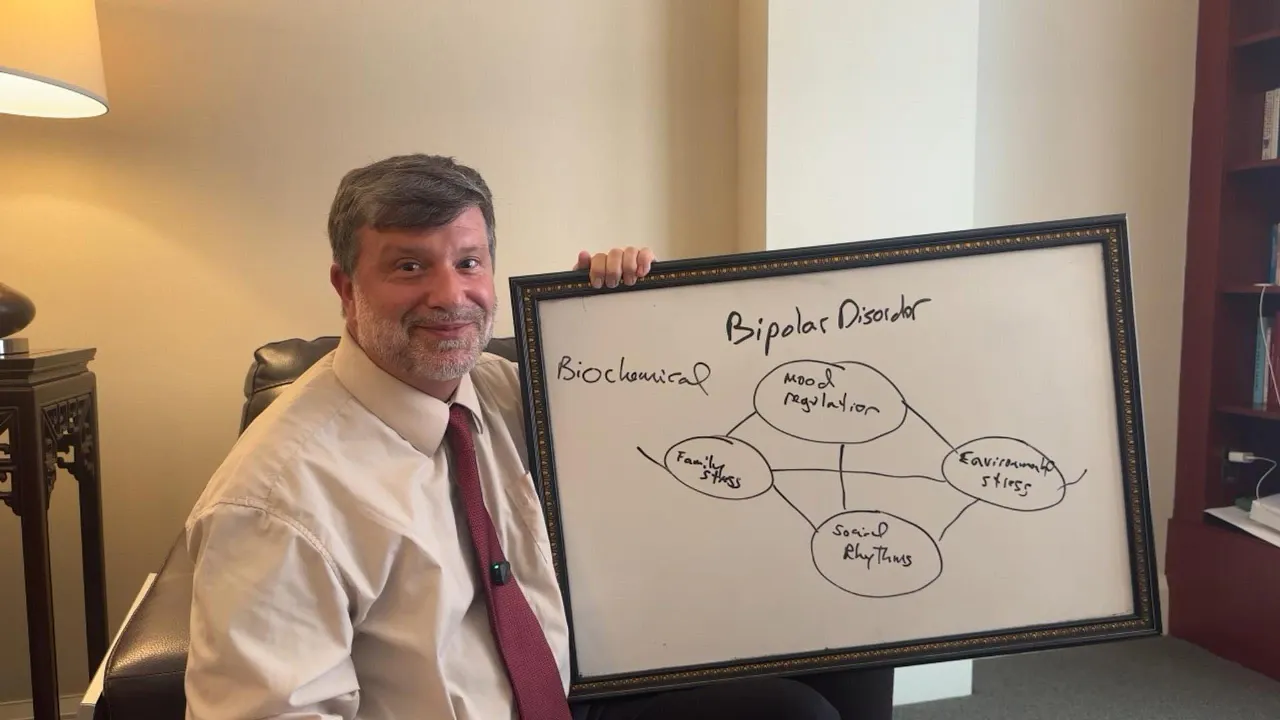
We use a whiteboard to track your mood cycles, triggers, and responses. You'll see exactly how thoughts, behaviors, and mood connect in your unique pattern.
2
3
1
Map Your Patterns
We use a whiteboard to track your mood cycles, triggers, and responses. You'll see exactly how thoughts, behaviors, and mood connect in your unique pattern.
2
Understand the Why
I teach you to understand your mind like a therapist does. We'll explore what drives your mood patterns and how to work with your brain, not against it.
3
Build Stability
You'll learn to catch warning signs early, respond differently to triggers, and create the stability that medications alone can't provide.

Welcome, let me introduce myself!
Dr. Mark Balabanis PhD
I'm a Cognitive Behavioral Therapy (CBT) Psychologist in practice for over 20 years.
I like to teach the "why" and the "how it works" behind your difficulties. This allows you to feel empowered to join me as a co-therapist while being supported and coached by me.
Lectured at:


Welcome, let me introduce myself!
Dr. Mark Balabanis PhD
I'm a Cognitive Behavioral Therapy (CBT) Psychologist in practice for over 20 years.
I like to teach the "why" and the "how it works" behind your difficulties. This allows you to feel empowered to join me as a co-therapist while being supported and coached by me.
Lectured at:
The benefits
Signs This Approach Could Help You
Most therapy teaches you to cope with symptoms. I teach you to understand why your mind creates them in the first place.
Previous therapy experiences:
Therapy focused only on medication management
You've tried multiple approaches without lasting stability
Therapists seemed overwhelmed by your mood swings
You were told to "just take your meds" without other support
Current struggles:
You're tired of feeling like a victim of your own emotions
Mood episodes are affecting your work or relationships
You want to understand your patterns, not just medicate them
You feel like you're walking on eggshells with your own mind
Readiness for change:
You're ready to work actively on understanding your patterns
You want stability that comes from within, not just medication
You're willing to track patterns and do the deeper work
You're looking for a therapist who understands mood complexity
The difference
Blending talk and interactivity for better success
The difference
Blending talk and interactivity for better success
Talk Therapy
Talk and epression for its own sake
Talk and epression for its own sake
Explores how you feel
Explores how you feel
You talk and your therapist listens
You talk and your therapist listens
Non-directive
Non-directive
My Approach
Personalized Plans
Personalized Plans
Learn how you can change how you feel
Learn how you can change how you feel
We actively work together
We actively work together
Goal-oriented
Goal-oriented
In-person and Remote
In-person and Remote
1 Hour session
1 Hour session
A blend of talk and active therapy
A blend of talk and active therapy
Continued ongoing support
Continued ongoing support
Frequently asked Questions
Need some frequently asked questions here